
Congratulations on being a responsible pet owner and doing your part to control the pet population. Most domestic cats are spayed or neutered to help prevent unwanted behaviour such as urine spraying and, of course, uncontrolled mating with other cats.
Spaying or neutering your cat is considered an elective surgery and is routine for veterinarians to perform. Females cannot get pregnant after being spayed and, within a few weeks post-surgery, male cats can no longer produce sperm after being neutered.
If you're new to pet insurance, check out our beginner’s guide to pet health insurance to learn how coverage can support your cat’s recovery and long-term health.
Your surgical discharge kit from the veterinary clinic should include:
-
Hand-outs that outline the procedure, how to monitor for pain and aftercare instructions
-
Tattoo and microchip information to ensure your pet is registered in the appropriate database
-
Pain relief for a few days after surgery
-
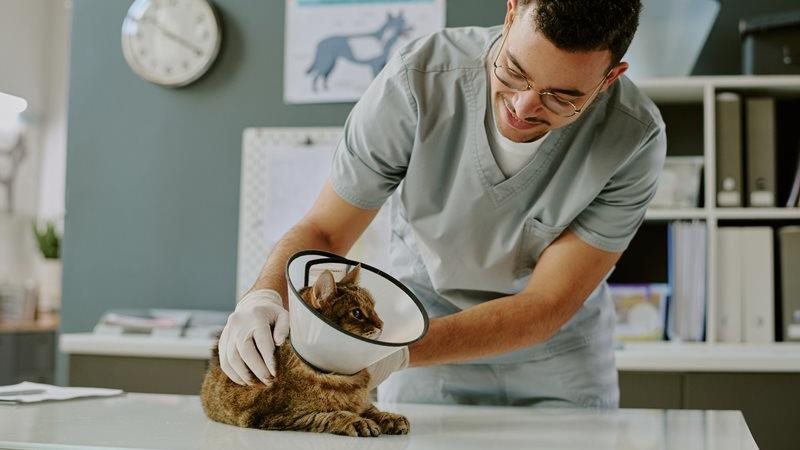
An Elizabethan collar (cone/lampshade/donut) or onesie to prevent licking
Your pet’s first night post-op
Most pets are sleepy after anaesthesia. Pets are given a general anaesthesia as part of the spay and neuter procedure. To be discharged, they must be awake enough to walk on their own. Contact your clinic if your pet is pacing, howling or appears anxious after bringing them home.
Monitor their appetite. If your pet is a cat, offer them about half of their typical supper meal to see if they are hungry once they get home. Do not change the diet during their recovery period unless recommended by your veterinarian. Your cat’s appetite should be back to normal within a day of surgery. Notify your veterinary team if you see any gagging, vomiting or diarrhea within the first few days.
Where are the stitches?
Routine male cat neuter incisions often don’t require sutures. Many pet parents ask, “Do male cats have stitches after neutering?” and the answer is usually no. For female cats, vets typically use dissolvable sutures below the skin so the cat spay incision may not be visible. These stitches and any tissue glue will dissolve over the next few weeks. Your vet will let you know if there are non-dissolvable stitches or staples, which are usually removed 10 to 14 days after surgery.
Check the incision
The cat spay incision healing process is smooth for most pets. Female cats will have an incision on their abdomen, while male cats have one or two tiny incisions near the scrotal area. Wondering what the cat spay incision looks like after 1 week? It should be closed with minimal redness or swelling. Any discharge, bruising or signs of infection should be reported to your vet. Monitoring the cat neuter incision is just as important, especially in the first few days.
Licking does not help your cat heal more quickly
Cats who lick at their surgical site may be curious, itchy or in pain. Licking and chewing at the incision will delay healing and may lead to infection or something known as dehiscence, where the whole incision falls apart. Cats who insist on licking should wear their Elizabethan collar or onesie for at least 7 to 10 days after surgery. If the collar causes panic or distress, call your veterinarian and ask for calming medication.
Limit exercise and household activity
Try offering stationary treat puzzles or place a few kibbles in different rooms to encourage surface foraging activities. Confine your cat to a smaller space with food and a litter box when they cannot be directly supervised by a family member. Again, some pets may need calming medications to help limit activity. Your hard work will pay off in having a cat who heals more quickly and without complications.
Use all the pain medication as directed by your veterinarian
Watch for obvious signs of pain like a hiss when you check their incision and more subtle signs of pain like droopy whiskers. Even if your cat looks fine after surgery, it’s important that they take all their recommended pain medication.
What to expect after neutering your cat
Whether your cat is male or female, you can expect some sleepiness, reduced appetite and a need for quiet time. If you're wondering what to expect after neutering your cat, rest assured that most recover quickly with proper care. Keep an eye on their incision, limit activity and follow your vet’s instructions for pain relief and aftercare.
If you're considering adding another furry friend to your family, check out our tips on how to choose a responsible breeder.
How Petsecure can help
While Petsecure doesn’t cover spay or neuter procedures, we help pet owners save up to 80% on unexpected vet bills, including taxes and exam fees. It’s one more way we support your cat’s health and your confidence in their care! Fetch your free Petsecure quote today.