
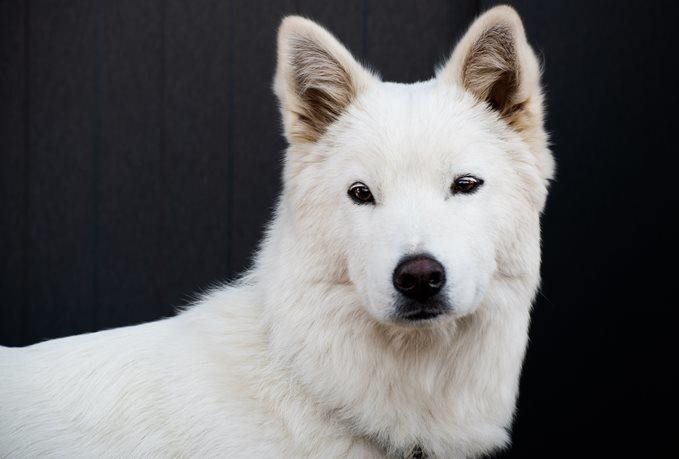
You may have heard that Jindo dogs can be hard to raise, but when you see those cute, foxlike faces you’ll think, “worth it!”
And it’s true. Jindos are loyal companions. They clean and groom themselves like cats. They’re easy to housetrain and quiet indoors, rarely barking without a good reason.
So don’t let their stubborn reputation hold you back. With the right knowledge, you can welcome a Jindo into your home and build a beautiful bond. That’s exactly what this guide is for, so let’s get started.
Korean Jindo dog at a glance
| Feature | Details |
| Height | 17.5 to 24 inches |
| Weight | 30 to 60 pounds (males are typically larger) |
| Lifespan | 12 to 15+ years |
| Coat type | Medium-length, double coat (sheds seasonally) |
| Colours | White, red fawn, wolf gray, black and tan, black, brindle |
| Temperament | Loyal, independent, alert, territorial, intelligent |
| Best suited for | Experienced dog owners, homes with 6ft+ fenced yards, active singles or families with older children |
History of the Jindo dog breed
To better understand the Jindo’s behaviour and temperament, it can be helpful to know its history. The Jindo dog (also known natively as the Jindo gae or 진돗개) gets its name from an island off the southwest coast of Korea, where it originated. Here, dogs were once allowed to roam free. They hunted and explored over long distances with mountainous terrain, so they developed a natural homing ability.
This is why Jindos today can easily navigate back home over incredible distances, like the famous Jindo, Baekgu. After being sold to a new family, Baekgu travelled 289 kilometres over seven months to get back to her original owners.

Beyond their impressive homing skills, the Jindo’s free-roaming island past shaped several other traits for the breed:
- Independent problem-solving, thanks to roaming freely
- Wariness of strangers due to originally living in isolated areas
- Excellent hunting and agility skills from ingrained survival instincts
The Jindo dog’s personality
Fierce loyalty: Jindos are famous for being "one-person" or "one-family" dogs. Once they bond with you, their devotion is absolute.Natural guardians: They are highly territorial and cautious around strangers. They make excellent watchdogs who will alert you to unusual activity. Thankfully, they aren’t prone to nuisance barking unless bored.
High prey drive: Originally bred to hunt independently, the Korean Jindo has a strong instinct to chase small animals. Unlike other hunting dogs, such as Labrador Retrievers, they may not do well off leash in dog parks.
Escape artists: Jindos have been known to jump over six-feet high fences. To help manage this behaviour:
- Remove “launch pads” like patio furniture, firewood and large rocks
- Find out what’s making them jump (e.g., boredom, loneliness, mating drive or noise anxiety)
- Use a bamboo roll or wooden lattice to extend your fence’s height
Do you have the right personality to be a Jindo owner?
Pet owners often have an easier time when a breed’s instincts match their own temperament. A Jindo’s ideal person is someone who:- Enjoys being active and outdoors, as Jindos love running and hiking
- Lives a structured lifestyle to help calm any hyper-alertness
- Doesn’t host social events (since strangers can stress Jindos)
- Has a quiet home (ideally without other pets) to avoid triggering their urge to defend their territory
- Has patience for positive reinforcement training (as Jindos rebel against harsh discipline)
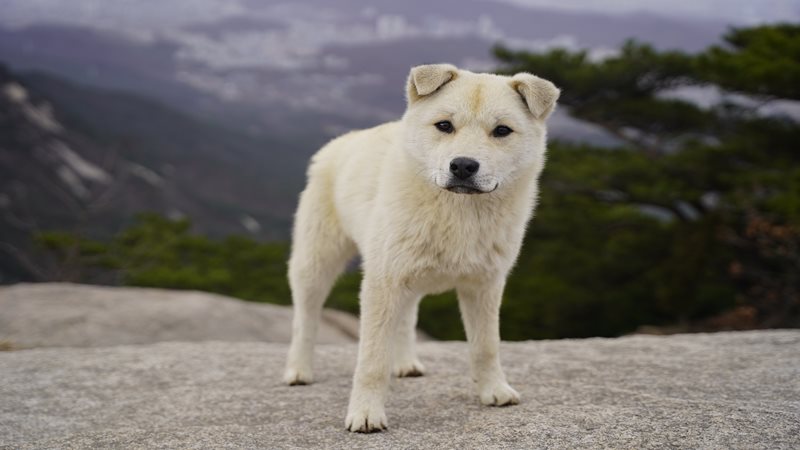
Caring for a Jindo dog in Canada
Handling the Canadian climateJust like many Canadian provinces, Jindo island has humid summers and dry winters. That means Jindo dogs can easily adapt to Canada’s four seasons. However, you should still be mindful of extreme temperatures. In the summer, provide shade and fresh water. When it gets extremely cold, watch out for signs of frostbite.
Exercise
This high-energy breed requires one to two hours of exercise each day. They love chasing small animals and running far away. That’s why you should keep them on a leash while out on walks and avoid dog parks.
If you live in a region with extreme cold, you’ll want to make sure your Jindo is able to get rigorous exercise while inside.
The ideal home
The ideal setup for a Jindo would be a house with a large yard that has a high, secure fence (over six feet). That’s because Jindos love escaping. They are experts at jumping, climbing or even digging under fences.
If you live in a condo or apartment, don’t give up yet. Indoors, Jindos are often quiet, relaxed and clean. They won’t bark often, so your neighbours will be happy. As long as you meet their exercise needs, you shouldn’t have any issues.
Staying clean
Jindos are considered one of the cleanest breeds because they:
- Clean and groom themselves like cats
- Have coats that naturally repel dirt
- Hate soiling their living space
- Require minimal bathing
- Don’t have a typical dog odour
Jindos from rescues and shelters
In Canada, most Jindos are rescue dogs. Like many rescues, they may have developed behaviour issues and require training to encourage bonding.Here’s some simple steps you can take to help your Jindo adapt to their new home:
- For the first three weeks, keep them in a peaceful space where they can decompress
- Arrange their environment to prevent bad habits
- Consider working with a professional trainer
- Use positive reinforcement to encourage good habits
- Establish a strict routine for eating and sleeping
Sample Jindo dog schedule
7 – 8 a.m.Start the day with a brisk, 40-minute walk. Dedicate the last 10 minutes to obedience or recall training.
8 – 8:30 a.m.
Provide breakfast and hydration. Remove food after 20 minutes to discourage grazing.
8:30 a.m. – 12:30 p.m.
Give them time to rest and play on their own. This can be done indoors or outdoors. Staying indoors encourages your Jindo to “turn off” and rest. If you leave them outside, they may want to patrol your home, hunt and even try to jump the fence. Leaving them outside on their own will require more training.
12:30 – 1:15 p.m.
Give them some toys to prevent midday boredom.
1:15 pm – 5:30 p.m.
Similar to the morning, provide them with rest and play time.
5:30 – 6:30 p.m.
Go on a longer walk (around 60 minutes) or engage in task-based play.
6:30 – 7:15 p.m.
Provide dinner, water and a quick brushing session to prevent matting.
7:15 – 10:00 p.m.
Spend some time in the same room as your Jindo, reading a book, watching TV or doing chores. This will help establish a bond even though you are not engaging them directly. Establish a consistent bedtime routine.
Common Jindo health issues
The Korean Jindo dog breed is generally hardy and has a long lifespan, often living 14 human years or more. However, they are still susceptible to hereditary conditions. Knowing what to expect at the vet clinic can help you budget for their care.Environmental and skin allergies: Jindos can be prone to skin allergies that may cause intense itching and discomfort. That could mean veterinary dermatology visits, allergy testing and ongoing medications.
Hypothyroidism: Due to genetic disposition, Jindos can develop underactive thyroids. This can lead to weight gain, lethargy and coat issues. If yours has this issue, your veterinarian may recommend lifelong hormone replacement therapy and regular blood panels.
Discoid lupus erythematosus (DLE): An autoimmune disease that primarily affects the skin, often around the nose. Depending on severity, it may require anything from a topical cream to systemic immunosuppressants.
Joint issues (hip dysplasia and patellar luxation): Like many active breeds, the Jindo dog can suffer from joint malformations. In some cases, this can require surgical correction.
Frequently Asked Questions (FAQ)
Is the Korean Jindo dog breed a good choice for a first-time owner?Jindos are usually recommended for experienced dog owners. That’s because their independent nature, high prey drive and territorial instincts require consistent training and extensive socialization.
Are Jindo dogs aggressive?
According to a study published in the Journal of Veterinary Science, only 1.4% of Jindos show aggressive behaviour. However, the reality is not so simple. The same study stated that 46.8% of Jindos show excessive excitability, and 30% show excessive vocalization. Many people might interpret these behaviours as aggressive. So, what’s an owner to do?
- Take your Jindo to dog training classes
- Learn about puppy socialization
- Be patient and firm when raising them
Yes! But it depends how you define affection. Jindos are loyal and devoted to their families. They often pick a favourite person and stick closely to them. However, their way of showing affection may not be what you expect.
Instead of cuddling, jumping on you or licking, Jindos are more subtle. They show love by:
- Following you around the house
- Leaning against your leg
- Resting in the same room as you
Unfortunately, they are not. Jindos have thick coats. They shed and release dander year-round, meaning they could trigger allergies in your home.
Do Jindo dogs bark a lot?
Jindos are not typically nuisance barkers. They are quiet and observant indoors. However, because they are natural watchdogs, they will bark loudly to alert you to strangers or unusual activity near their territory.
Are Jindo and Shiba related?
The Jindo and Shiba have similar physical features, including a foxlike face, pointed ears and curled tails. They’re also both spitz-type dogs, descended from primitive breeds in Siberia.
The Korean Jindo dog is generally larger, much more loyal to a single owner and less friendly toward strangers than the Shiba Inu.
Do Jindo owners need pet insurance?
Pet insurance can help cover some of the costs of taking care of a Jindo. That could even include:
- Treatment for common heredity issues like skin allergies and joint issues
- Behaviour therapy to help with excitability, territorial instincts or adjusting to a new home after being rescued
- Ongoing medication for chronic conditions like hypothyroidism